
Every business with a website has heard the term SEO. Most business owners know they need it. But very few understand what it actually is, how it works, and why some businesses rank on page 1 of Google while others stay invisible forever. This guide explains everything from scratch -- no jargon, no assumptions, just a clear and honest explanation of what SEO is and how to use it to grow your business in 2026.
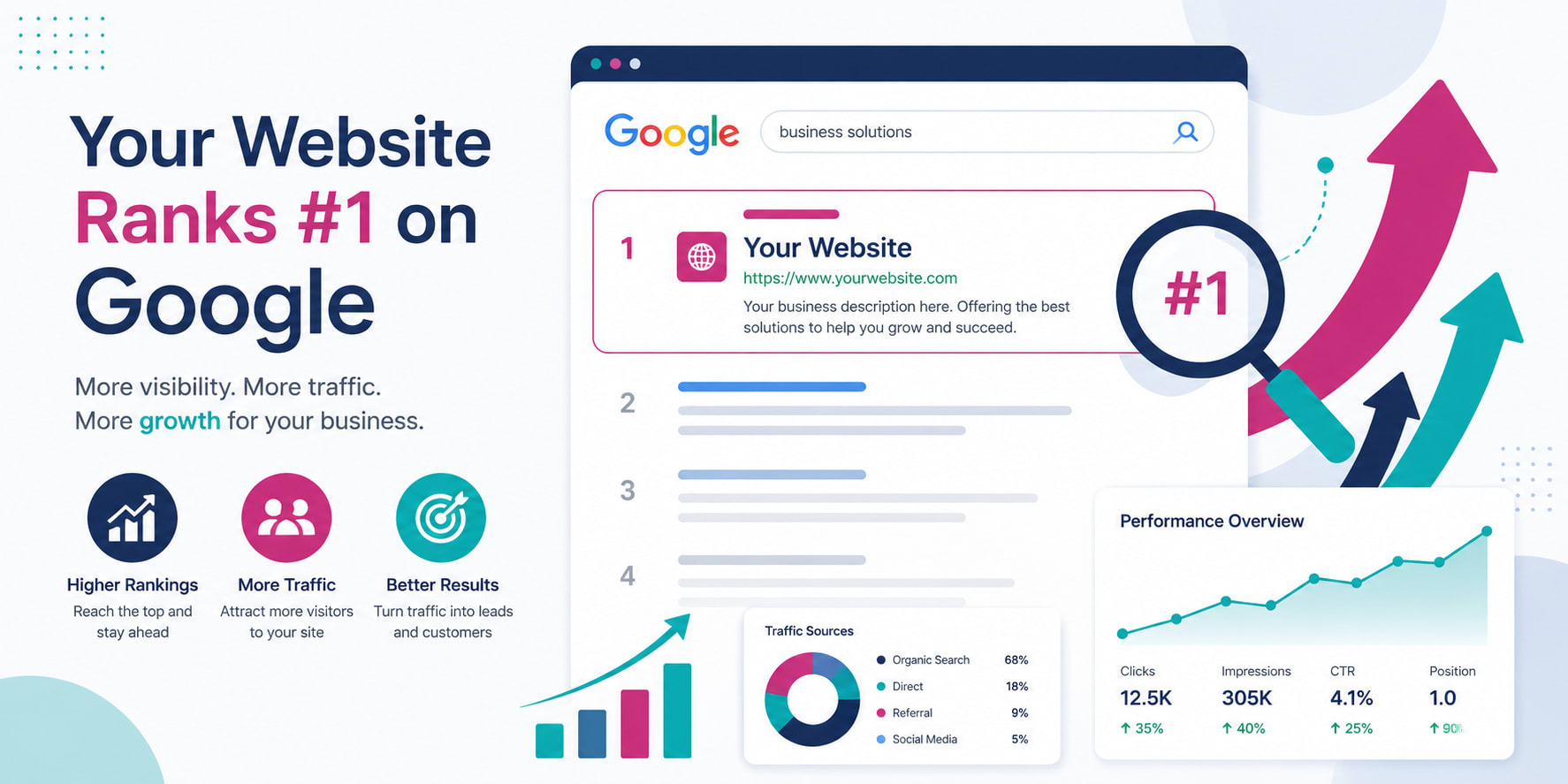
SEO (Search Engine Optimisation) is the process of improving your website so it appears higher in Google and other search engine results when people search for your products or services. Higher rankings mean more visibility, more website traffic and more customers -- without paying for ads. This guide covers everything you need to know to get started.
What SEO Is -- And What It Is Not
Before diving into how SEO works, it helps to clear up the most common misconceptions. These myths stop businesses from investing in SEO properly and cost them enormous amounts of traffic and revenue every year.
SEO is just about stuffing keywords into your content
Keyword stuffing was a real tactic in the early 2000s and many older guides still reference it. Business owners who learned about SEO years ago often still believe this is how it works.
Modern SEO is about relevance, authority and user experience -- not keyword density. Google's algorithms are sophisticated enough to understand context, intent and content quality. Keyword stuffing today gets your site penalised, not rewarded.
SEO is a one-time task
Many businesses pay an agency once to "do SEO" and then wonder why rankings drop six months later. The idea that SEO is something you finish and tick off a list is extremely common.
SEO is an ongoing process. Google updates its algorithm hundreds of times per year. Competitors are constantly publishing new content and building links. SEO requires continuous effort -- regular content, technical maintenance and link building -- to maintain and improve rankings over time.
Paid ads and SEO are the same thing
Both involve appearing in search results, so many business owners assume Google Ads and SEO work the same way. Some even think buying ads helps organic rankings.
Google Ads are paid placements that stop the moment you stop paying. SEO builds organic rankings that generate traffic for free, indefinitely. Running Google Ads has zero effect on your organic rankings. They are completely separate systems with different mechanics, costs and long-term value.
How Search Engines Actually Work
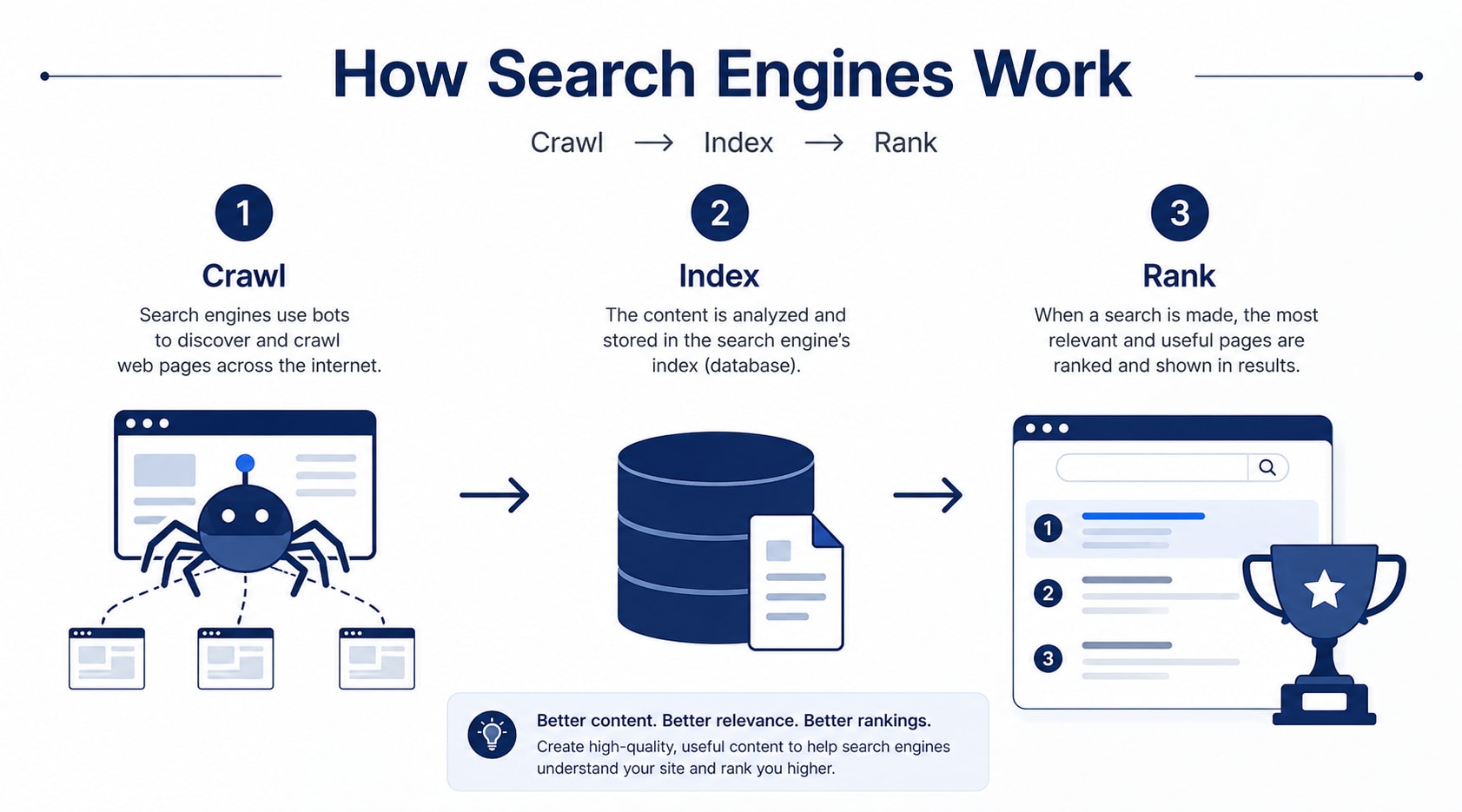
To understand SEO, you first need to understand what search engines do and how they decide which pages to rank. The process happens in three stages:
1. Crawling
Google uses automated programs called crawlers or spiders to browse the web. They follow links from page to page, discovering new and updated content continuously. If Google cannot crawl your page -- due to technical errors, blocked robots.txt or broken links -- it will never appear in search results regardless of how good your content is.
2. Indexing
After crawling a page, Google analyses and stores it in its index -- a massive database of billions of web pages. Google evaluates the content, structure, images and links on each page to understand what it is about and how useful it is. Pages that are thin, duplicate or confusing may be crawled but not indexed.
3. Ranking
When someone searches on Google, its algorithm evaluates all indexed pages relevant to that query and ranks them by hundreds of factors -- relevance, authority, user experience, page speed, mobile friendliness and more. The pages that best satisfy the searcher's intent appear at the top. SEO is the process of optimising your pages to rank higher in this evaluation.
The Three Pillars of SEO
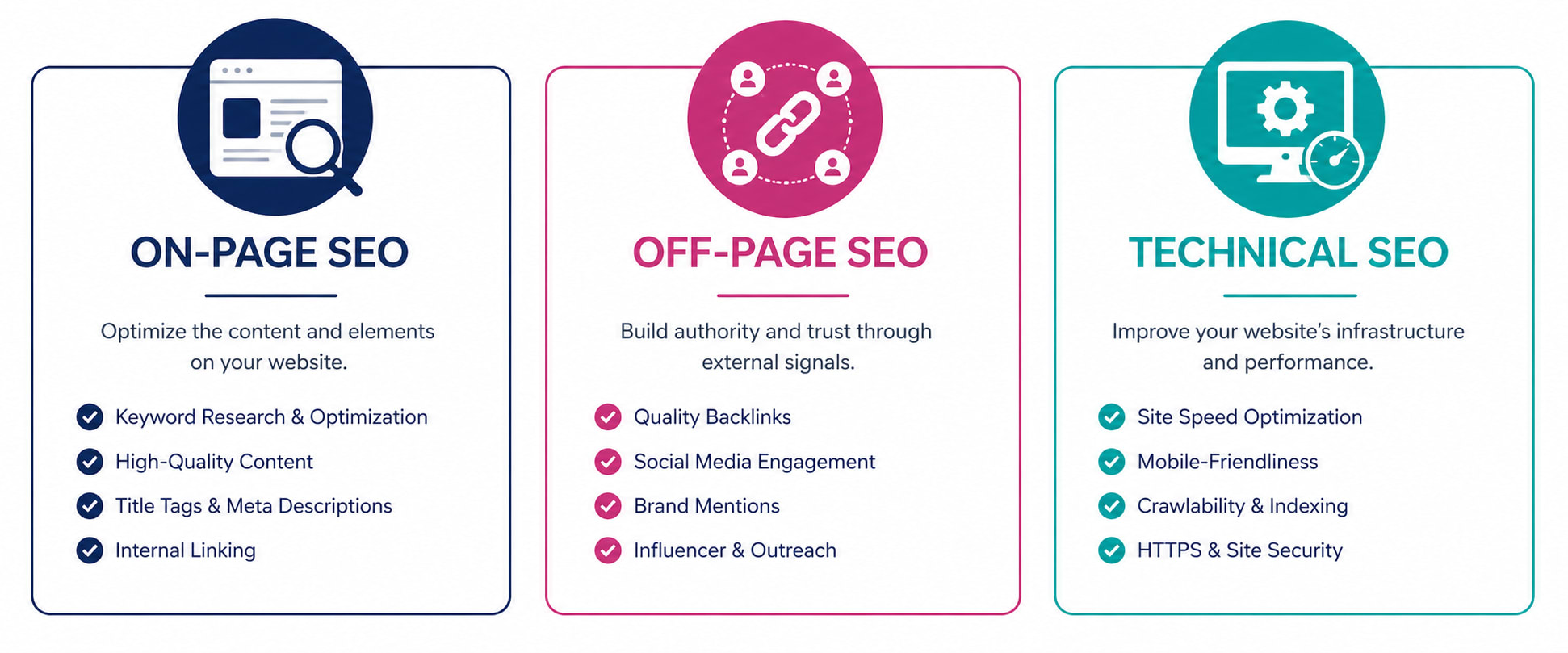
SEO is commonly divided into three core areas. Every successful SEO strategy addresses all three simultaneously. Focusing on just one while ignoring the others produces limited and unstable results.
On-Page SEO
Everything you do on your website to make individual pages more relevant for target keywords. This includes writing high-quality content, optimising title tags and meta descriptions, using proper heading structure (H1, H2, H3), adding internal links and optimising images with descriptive alt text. Our SEO services cover complete on-page optimisation for every page on your site.
Off-Page SEO
Everything that happens outside your website to build its authority and credibility. Backlinks -- links from other websites pointing to yours -- are the most important off-page factor. When authoritative websites link to your content, Google sees this as a vote of confidence. The quality and relevance of your backlink profile is one of the strongest ranking signals in 2026.
Technical SEO
The behind-the-scenes work that ensures search engines can crawl, index and understand your website efficiently. Technical SEO covers page speed, mobile friendliness, site architecture, XML sitemaps, structured data, Core Web Vitals and fixing crawl errors. Without a solid technical foundation, on-page and off-page efforts deliver a fraction of their potential.
How Long Does SEO Take to Work
One of the most common questions we hear. The honest answer is: it depends. But here is a realistic timeline based on our experience across hundreds of campaigns:
Technical audit and fixes, keyword research, on-page optimisation of existing pages. No visible ranking changes yet but critical groundwork is laid.
Long-tail keyword rankings begin to appear. Google starts recognising the improved signals. Traffic increases slightly. First backlinks from content and outreach begin building domain authority.
Meaningful ranking improvements for target keywords. Organic traffic growing consistently month over month. Lead volume begins increasing noticeably from organic search.
Strong rankings for competitive keywords. Organic traffic becomes a primary lead source. ROI from SEO exceeds paid advertising for most businesses at this stage. Rankings compound as authority builds.
What SEO Results Actually Look Like
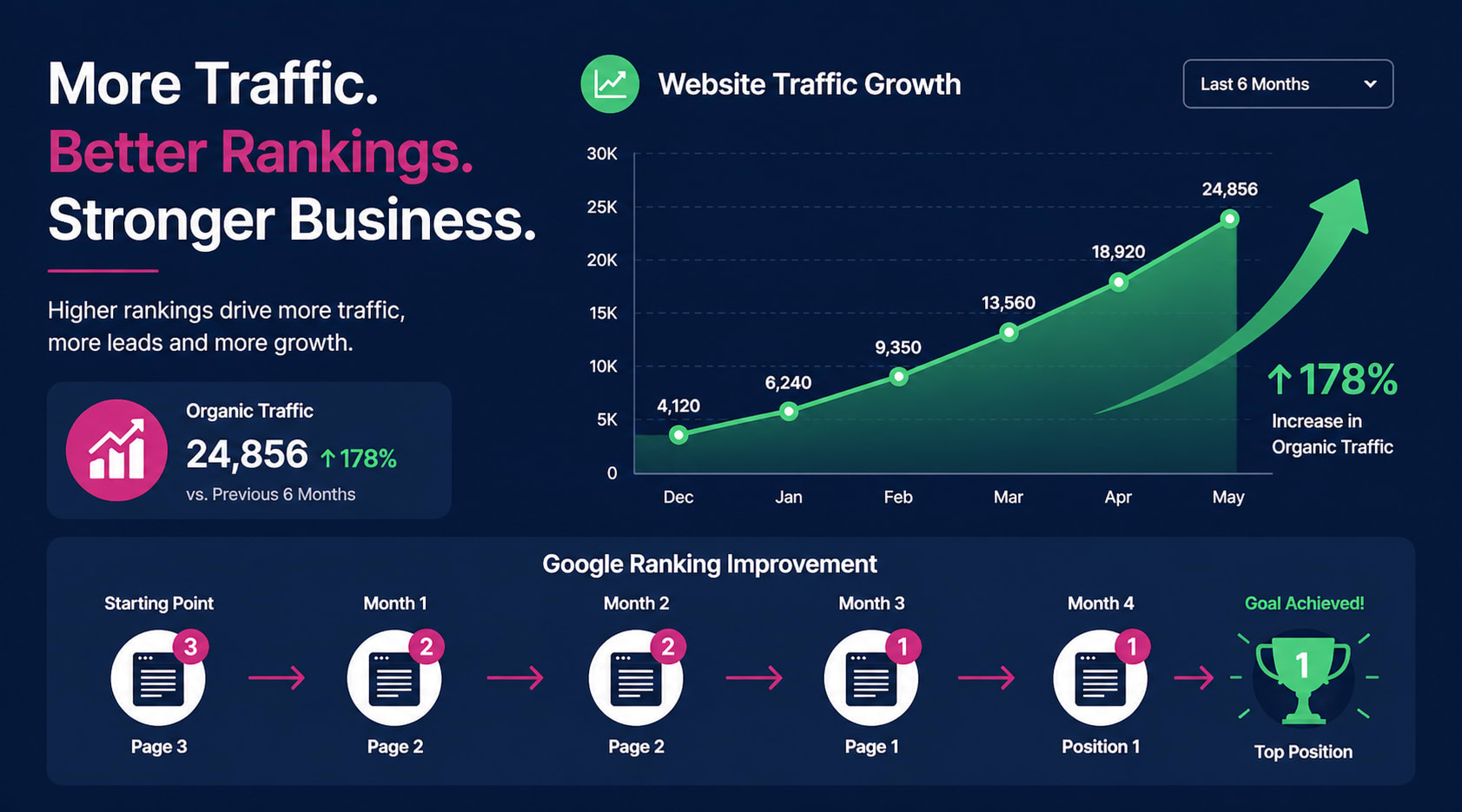
SEO results are not theoretical. When done correctly, the impact on traffic, leads and revenue is measurable and significant. Here is what sustainable SEO growth looks like:
Frequently Asked Questions
SEO stands for Search Engine Optimisation. It is the practice of improving a website's visibility in organic (non-paid) search engine results. The goal is to rank higher for relevant search queries so more people find your website when searching for your products or services on Google, Bing and other search engines.
SEO costs vary widely depending on your industry, competition level, current website state and goals. Small business SEO typically ranges from $500 to $2,000 per month. Mid-size businesses in competitive industries typically invest $2,000 to $5,000 per month. Enterprise SEO for highly competitive national or international campaigns can range from $5,000 to $20,000+ per month. Our pricing page covers UpRango's specific packages transparently.
Basic SEO -- optimising meta tags, improving page speed and writing keyword-focused content -- can be done by most business owners with time and willingness to learn. However, competitive industries require consistent content production, technical expertise and active link building that most business owners cannot sustain alongside running their business. An experienced SEO agency typically delivers results 3 to 5 times faster than DIY efforts in competitive markets.
Absolutely. While AI search platforms like ChatGPT and Perplexity are growing rapidly, Google still processes over 8 billion searches per day and remains the dominant way people find businesses online. Additionally, the same content quality and authority signals that improve Google rankings also help your brand appear in AI search recommendations. Our AI SEO services ensure you rank on both traditional and AI search simultaneously.
Standard SEO targets broad or national search queries -- for example "best CRM software" or "digital marketing agency". Local SEO specifically targets location-based searches -- for example "digital marketing agency in Dubai" or "plumber near me". Local SEO involves optimising your Google Business Profile, building local citations and earning reviews in addition to standard on-page and technical optimisation. If your business serves a specific geographic area, local SEO is essential.